The Private Jet to Hell, One Year Later
The Trump regime tried to take eight migrants to a prison in South Sudan via private jet without anyone noticing.
A year ago Wednesday evening, I was scrolling through BlueSky when I came across some alarming news: The Trump administration had ignored a federal judge’s orders and put a group of migrants from all over the world on a plane to South Sudan. In fact, their lawyers said, the flight might still be in the air.
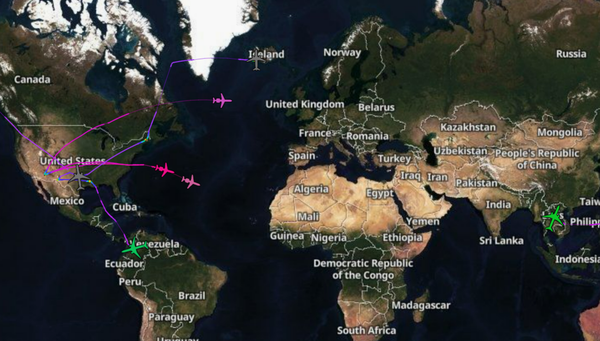
I wonder if I can figure out what plane they’re on, I thought, seeking a distraction more than anything. I had left The Washington Post a year and a half earlier and was supposed to be writing a book, which wasn't going particularly well. The words “floundering” and “failure” flopped around in my head most days as I went back and forth between the never-ending book proposal and the never-ending doomscroll that is Trump 2.0.
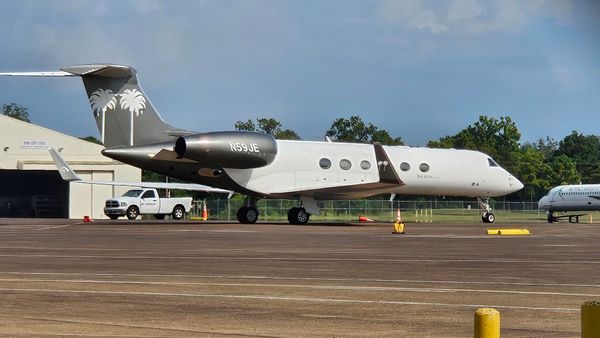
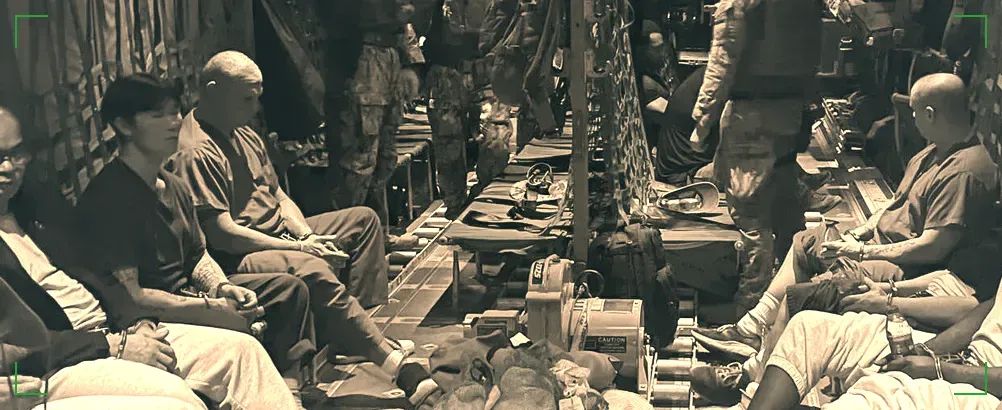
Two hours later, I had found the plane – a Gulfstream V the New York Times would later confirm carried the eight migrants – while it was still over the Atlantic Ocean. I started posting about it, attracting the attention of a few people who were already regularly tracking ICE flights. They told me the migrants onboard were likely shackled at the wrists and ankles attached to a chain around their waists.
God, how fucked up it must be to be on a luxury jet in handcuffs, I thought. They were heading into what must have seemed like the depths of hell – a country they’d never been to, may not have ever even heard of, where they didn’t speak the language or know a soul, and that was in a near-constant state of civil war – and they were doing it via a grotesque display of wealth some rich guy loaned to ICE.
I have been stuck on that image, shackled and scared people on a private jet to the unknown, for 365 days now. I have written about it as a freelancer and talked about it on podcast after podcast. It propels me now as I wake up most mornings at 4:15 a.m. to update my spreadsheets. It propelled me that night when the plane began to descend toward Ireland and one of those flight trackers, who went by “JJ in DC,” said, “Someone call Shannon Airport.”
This flight marked the beginning a pivotal year for a lot of people, not just me. Judges. MAGA Barbies. Heads of impoverished states. Thousands of soon-to-be-disappeared migrants. Tens of thousands of worried loved ones. Most importantly, the men onboard that plane: Enrique Arias-Hierro, Dian Peter Domach, Jesus Muñoz Gutierrez, Kyaw Mya, Nyo Myint, Thongxay Nilakout, José Rodriguez-Quiñones, and Tuan Thanh Phan.
All had been convicted of serious crimes, as DHS propagandist Tricia McLaughlin lasciviously described the next day in one of the first of her notoriously dishonest press conferences.
Left unsaid was that they’d completed their sentences, sometimes many years ago, and that in America we are supposed to believe a person should not be put in jeopardy of life or limb twice for the same offense.
Left unsaid was that at least some of them had won protections from removal to their countries of origin, like Cuba and Myanmar, because of the dangers they would face there, and that in America we are supposed to believe in the principle of non-refoulement.
Left unsaid was that the “host” nations for third-country nationals are supposed to be a safe place to resettle, that South Sudan was offering neither, and that the same State Department that pressured South Sudan to take them had advised Americans not to travel there, because it was too unsafe.
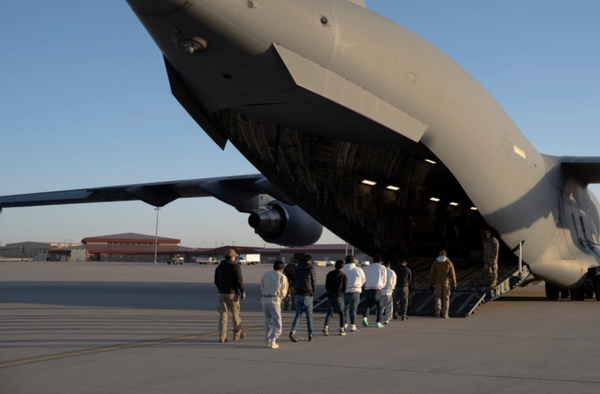
McLaughlin refused to admit it then, but the plane had landed at a small US military base in Djibouti, an apparent change of course after federal judge Brian Murphy ordered the men remain in US custody. There they languished in a shipping container prison for six weeks, until the Supreme Court ruled Trump's third-country removals could proceed, under certain conditions, while they considered the broader case. They have yet to release their opinion.
The men arrived in South Sudan via a US military aircraft on July 4 – a fitting day perhaps for this country fallen so far from its first principles – and were immediately detained at an undisclosed location.
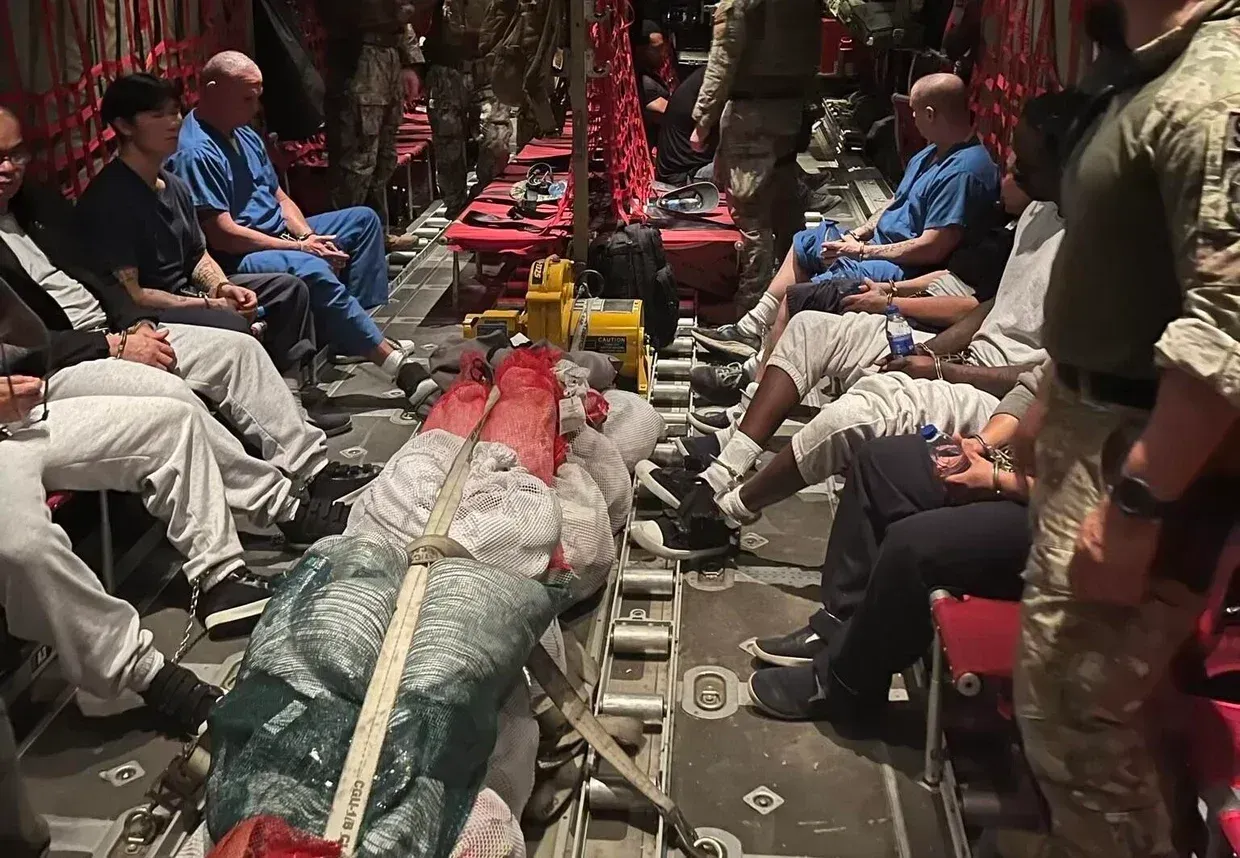
For the mainstream media, the story was essentially over. The men had disappeared into that great big Black hole called “Africa,” and that was that. Try to find a word on their whereabouts in the New York Times or CBS News; save for a wire story on Gutierrez, who was repatriated to Mexico last September, you'll come up empty.
But their story isn’t over for them, or their attorneys. They have all continued to exist on the same earthly plane we’re on; time measured, if not felt, in the same units – 365 days.
Domach, the only one of the migrants who was actually from South Sudan, has also been released, according to Human Rights Watch, but the rest are still being detained in circumstances that have not been made public. Amnesty International has released multiple appeals over the past 10 months, revealing that none of the six have been granted unfettered or unmonitored access to their attorneys. Myint, who came to the US in 2016 as a refugee from Myanmar, reported suicidal thoughts in October and November, according to Amnesty, though it's unclear if those thoughts have since gone away or if Myint has been prevented from speaking to the outside world since then.
I’ll be honest: I know a little more than I can write here, but the cadre of aid groups, officials and attorneys, both in the US and abroad, advocating for their release are in such an unprecedented situation that they have been extremely cautious with what they share, lest it risk the men’s freedom in some way they cannot foresee. As a journalist, my default is to think shining a light on injustice is the best protection, but I have had to admit to myself more than once this year that until they are free, I don’t actually know if that’s true. Nobody does.
Immigration attorney Tin Thanh Nguyen, who represents Nilakout and Phan, who are from Laos and Vietnam respectively, told me about that uncertainty via text: “It has been difficult navigating the bureaucratic terrain to secure my clients’ liberation and repatriation. I am wearing the hat of diplomat, aid agency staff, advocate, and lawyer trying to accomplish the impossible.”
The lack of contact with his clients has been “very concerning,” he wrote, but “I am grateful to have the working relationships I have with the governments of South Sudan, Laos and Vietnam so that these men can get sent to their countries and start new lives.”
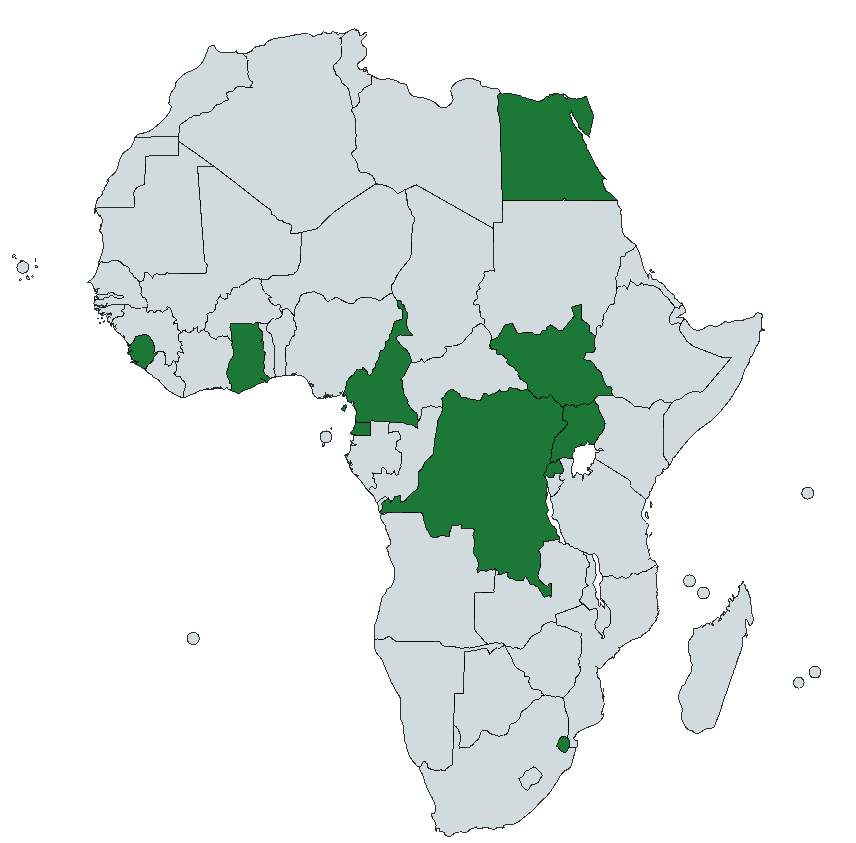
Nguyen now represents a number of third-country nationals who have been sent to a growing list of African countries that have been pressured, paid off, or otherwise induced to sign “host” agreements with the Trump administration in the last year. In March, Nguyen secured the release and repatriation of Pheap Rom, a Cambodian man who came to the US as a child refugee and had been held in a maximum security prison in Eswatini (formerly Swaziland) for five months.
Like the group sent to South Sudan, Rom and 18 others sent to Eswatini have all been convicted of serious crimes and finished their sentences. “I’ve taken accountability for my crimes. I completed my 15‑year sentence and used that time to rehabilitate myself so I could have a second chance in life,” Rom said in March. “I understood I would be deported and accepted that. What I don’t accept is that I was sent to a country where I have no ties at all and then locked up again, even though I had already paid my debt to society.”
Last May, James Stout – a journalist I’d admired, who reached out to me the night of the South Sudan flight – said the Trump administration was violating the rights of migrants with violent records first so that the general public wouldn’t care. But, he warned, these cruel expulsions wouldn’t stay limited to them.
He was right.
In September, when the third-country removals to Ghana began, McLaughlin’s litany of migrants’ crimes – exaggerated as they continued to be – were notably less grave. Some of these “heinous criminals,” as she called them, had been convicted of ... nonviolent offenses, like fraud. Just like our president.
Left unsaid: Most of the migrants sent to Ghana had no criminal record whatsoever. Some were legal asylum-seekers, like a 21-year-old woman who told the New Yorker she fled Togo fearing genital mutilation. All of them had court protections barring their return to their countries of origin. But after brief detentions, Ghanaian authorities forced nearly all of them to do just that.
A former Omni Air International flight attendant cried as they described one of those flights to me later, how a man who’d annoyed the contract guards and been wrapped in a full-body restraint on the floor screamed over and over, “I’m already dead! I’m already dead!”
I think a lot about Rabbiatu Kuyateh, a grandmother from Sierra Leone who’d lived in the US for more than 30 years, just down the road from me in Bowie, Md. Did her son go to the same school mine goes to now, where many of the students and faculty are West Africans? Kuyateh was snatched up by ICE last fall for seemingly no reason at all, other than that her regular check-in happened to coincide with when they had a plane waiting. After Ghana violently forced her back to Sierra Leone, where she faced torture because of her father’s political ties, she fled again and is in hiding in another country. She owns a home here in Maryland, but she can’t come home to it.
That’s the pattern now for most of the 25 known countries who have taken an estimated 17,500 third-country nationals – get them back as soon as possible, preferably before they leave the airport. Egypt takes Russians straight from ICE charters to Egyptair planes bound for Moscow. Same for the Iranians ICE flies to Qatar and Kuwait – immediately sent to Tehran. Honduras, deemed a “safe” place to send Guatemalans, soon forces them back to Guatemala. Guatemala, deemed a “safe” place to send Hondurans, soon forces them back to Honduras.
MORE: Tracking All of Trump's Known Third-Country Removals
In February, Judge Murphy tried again, ruling Trump’s third-country removal policy is illegal and must stop immediately. This time it only took a few days for an appeals court to lift his hold again. I wonder if he still believes in the thing he dedicated his life to, this alleged rule of law.
In April, ICE flew 15 South Americans with deportation protections to the Democratic Republic of Congo, including Adriana Quiroz Zapata, a Colombian woman with diabetes and other health conditions who had fled her country after experiencing horrific abuse from a former partner and his friends in the national police. DRC told the US it could handle her complex medical needs, and last week, a US judge ordered her return.
On Monday, DHS officials told the judge it was too dangerous to bring her back because of the ongoing Ebola outbreak. Third-country nationals sent to Rwanda, Uganda, and South Sudan are now also at risk.
There is no bottom. Yet.
A year ago tonight, I called the Shannon airport police. I told them where the jet was parked, who I believed was onboard, and why I believed that. I told them about the federal judge, about the shackles, about the plan to send them to South Sudan. I said I knew our judge’s orders didn’t matter in Ireland, but maybe they had human trafficking laws that would apply here?
A supervisor told me she was sending someone to check, but the plane took off two hours later. The transport minister still won’t say what, if anything, happened that night.
I knew my phone call crossed a line. I tried to interfere in a story, and even though it wasn’t a story I was covering at the time, I understood that in the eyes of my former colleagues in mainstream media, I had grabbed a third rail. I briefly considered keeping it secret, but there was a recording of the call that was not under my control, and I figured it was better to tell the truth now than have it told for me later.
I could not stop thinking about shackled people on luxury jets. And it kept happening. It had been happening. I started reporting.
JJ in DC turned out to be a former natsec guy who refused to work for Trump. He and I started exchanging info throughout the day, just about everyday. I know his real name now.
In July, when a left-leaning outlet rescinded their acceptance of my ICE flight pitches, one of their editors told me he “respected the hell out of what [I] did,” but they couldn’t work with me. I had tried to interfere.
When I told non-journalism friends about it, about grabbing the third rail, they didn’t get it. “You reported a crime in progress to the relevant authorities, how is that bad?”
A journalist friend told me one of his favorite outlets won’t work with him anymore, because he had held a cold baby in his coat to keep it warm, and since he’d been reporting on the baby’s family, he had interfered. I remembered the junior staffer on the foreign desk trying to keep her boss from finding out she was collecting household items for Afghan refugees, because she didn’t want to get in trouble. And that I used to abstain from singing “Walls of Jericho” with my church choir during Trump 1.0, because I was afraid some shithead from Project Veritas would catch me being biased against walls. I think I know now why people don’t trust the media.
I didn’t give any more heads-ups to editors after that, and the freelance gigs started coming in, but nowhere near the pace necessary to keep up with all the ICE flight news that urgently needed telling. I worried about being “found out,” that my fuck-up would hurt people and stop the truth about these insane ICE flights from being told. I leaked a raft of stories to respectable reporters.
In January, Semafor reported the New York Times and my former employer knew about the invasion of Venezuela in advance, but editors decided not to publish their stories, to protect the lives of Americans carrying out this flagrantly illegal act.
I was livid. That is interference! You interfered! You stopped a reporter from reporting in order to change the outcome! You prioritized some lives over others! It was so obvious; old journalism conventions were woefully unprepared for the times we live in, and when it came to protecting power, they end up being bullshit anyway.
I decided then to just tell the truth and hope that would make me trustworthy.
The truth is I want to record the name of everyone responsible for third-country removals, everyone who has profited, everyone who has looked the other way. I want to hand those names over to a court. I want reparations for human beings treated like trash and countries treated like landfills. I want to show what ICE wants to hide, and for the hidden to know they aren’t forgotten. I want third-country removals to end and for everyone to come home.
I absolutely hope my reporting changes the outcome, that it is useful. Why the fuck else would someone want to report?
Thank you for reading. I am a former Washington Post staff writer, and as far as I know, I’m the only journalist in America covering ICE flights full time. I am committed to keeping this reporting non-paywalled, but if you are able, please sign up for a paid subscription or send me a one-time tip, so I can continue this important work. –Gillian