The Air Force has been doing secret ICE flights to Honduras for months
At least some of the flights were third-country removals, human rights group says.
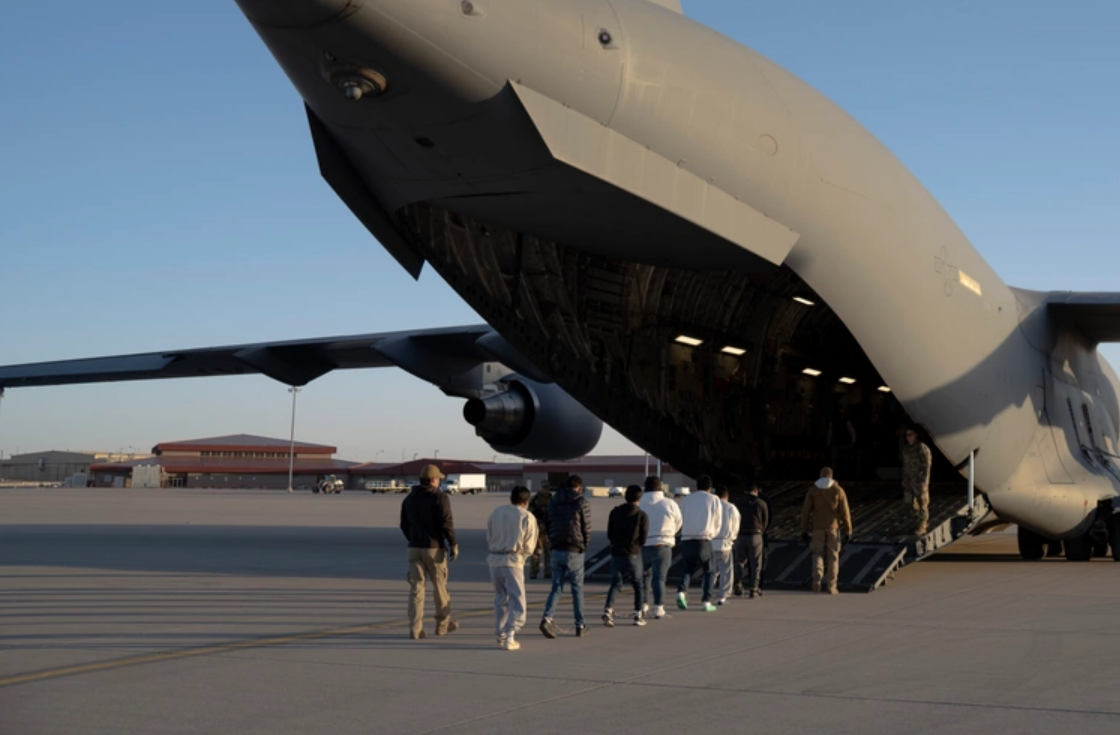
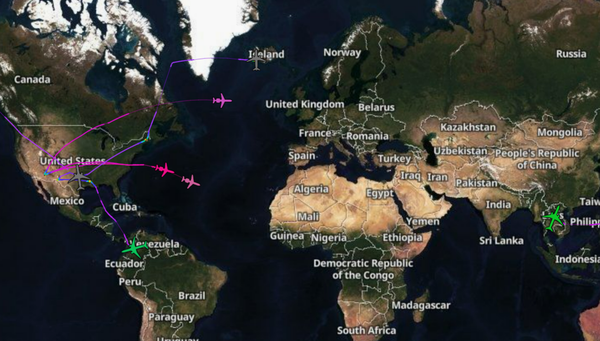
US Air Force aircraft have conducted dozens of Immigration and Customs Enforcement removal flights to Honduras since early June, flight data shows, in what is the largest and most regular use of military aircraft for ICE in Trump’s second term. At least some of the flights held third-country nationals from other Central American countries, according to the ICE Flight Monitor at Human Rights First.
All of the flights left the ICE Air hub of Harlingen, TX, and arrived in the city of San Pedro Sula, a common destination for ICE removal flights. It was not clear why military aircraft were used for these flights, given that ICE’s civilian charter airlines already operate multiple removal flights to Honduras everyday.
HRF confirmed that the first three military flights – on June 4th, 6th, and 10th – held third-country nationals, but it was not aware of additional third-country nationals on any of the other flights, according to HRF’s Savi Arvey.
When asked if any of the military flights held third-country nationals in addition to the first three, a DHS spokesperson who did not identify themselves responded, “For operational security purposes, we would never confirm the location of an airplane.” Which, you may notice, does not answer the question, but it is nearly identical to an answer DHS gave me about a different story several days ago.
MORE: Tracking all of Trump's Known Third-Country Removals
Under a deal signed last summer, Honduras has agreed to accept up to 10 third-country nationals per month from Spanish-speaking Latin American countries. Plus, at least 90 Guatemalans have been removed to Honduras outside of the parameters of the deal, according to Third Country Deportation Watch, a joint project of HRF and Refugees International.
The first two flights were on C-17 Globemasters – large jets generally used for cargo – while the subsequent flights were on C-130s, a smaller and more versatile turboprop plane. HRF publicly flagged the first three flights when they happened in early June but not the subsequent flights. On Aug. 8, the ICE-flight tracker who goes by “JJ in DC” spotted a C-130 doing an apparent Honduras removal route, and saw that it was the fourth such flight the aircraft had done that week.
This prompted me to scan Harlingen’s airspace between June 10 and Aug. 8, and I subsequently found 22 more previously undetected C-130 round trips between Harlingen and San Pedro Sula on 11 different planes. There is another one scheduled for today.
There may have been more of these flights during the eight-week period I scanned. These planes are more difficult to track than civilian ICE charters for a couple of reasons: 1) USAF has continually swapped out different aircraft to do the route, and there are simply too many C-130s in USAF’s fleet to check them all; 2) Military aircraft can turn off their ADS-B signals, which can make them a little harder to spot on public flight databases.
It is unlikely these flights were anything but ICE removal flights, since USAF maintains an air base at Soto Cano in Honduras. Had these been military missions, they very likely would have landed there instead San Pedro Sula.
The vast majority of ICE flights using military aircraft during Trump’s second term have been operated by the US Coast Guard, which, while a branch of the military, is administered by the Department of Homeland Security. USCG started doing dozens of domestic ICE flights per week in June 2025 – news I broke for Rolling Stone two months later. Those flights continued through April and then stopped.
The Air Force has also previously done a handful of ICE flights during Trump’s second term, but these have typically been one-off removal flights rather than regularly scheduled trips like the newly discovered Honduras flights. For example, a USAF C-17 was used for the first expulsion of third-country nationals to Ghana in Sept. 2025 (which I also wrote about for Rolling Stone). Until these regular flights began in June, USAF had not appeared to have done any ICE flights since that time.
An ICE flight operated by the Coast Guard I observed last year, where the C-130's little cousin, the C-27, was used.
The C-130s used for the Honduras flights all appear to have been based at Dyess Air Force Base near Abilene, TX, or Little Rock Air Force Base in Jacksonville, AR.
USAF representatives did not immediately respond to a request for comment about the reason for using military aircraft for these flights. This story will be updated if they do.
No, They Are Not Throwing People Out of These Planes.
One final note: Since I am regularly asked if ICE is throwing people out of planes into the ocean, let me be clear that I do not think these flights are evidence of this conspiracy theory.
Yes, these types of planes can be opened midflight (unlike civilian ICE planes). Yes, they are flying over the ocean. Yes, ICE’s appetite for cruelty does not appear to have a limit, and members of the military have so far shown no signs of refusing to comply with the Trump administration’s other criminal orders, like destroying fishing boats in the Caribbean Sea and Pacific Ocean.
However, I think this conspiracy can be safely ruled out here for one simple reason: The civilian airport at which they are landing. If the military were throwing people out of the plane and left no survivors, they would land at the air base in Soto Cano so as not to draw attention to their lack of a human cargo. If they were throwing people out of the plane and left survivors to be deported upon landing, well, we would have heard about it by now.
Thank you for reading. I am a former Washington Post staff writer, and as far as I know, I’m the only journalist in America covering ICE flights full time. I am committed to keeping this reporting non-paywalled, but if you are able, please sign up for a paid subscription or send me a one-time tip, so I can continue this important work. –Gillian